ERFLEarth and Environment ยท FIU

Environmental Risk & Finance Lab (ERFL)

Modeling environmental risk. Understanding system impacts. Designing financial resilience.

Dr. Dan Li, Earth and Environment, FIU

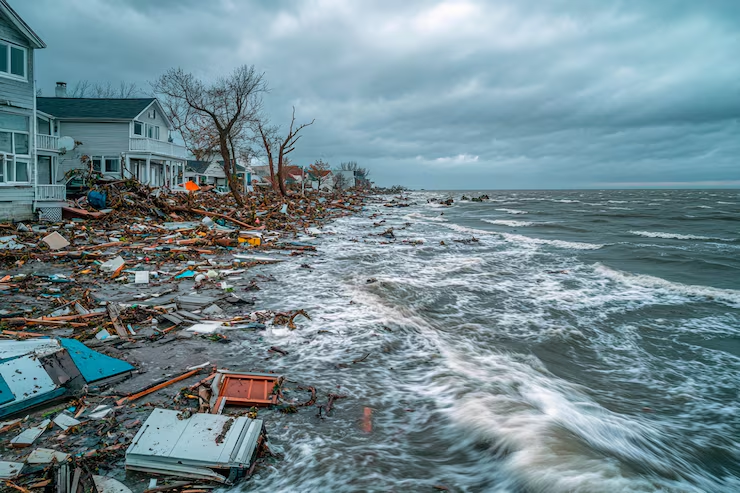
Coastal homes and debris along the shore after a storm.

Research in Action

Three lines of work that connect hazard models to financial design at FIU and beyond.

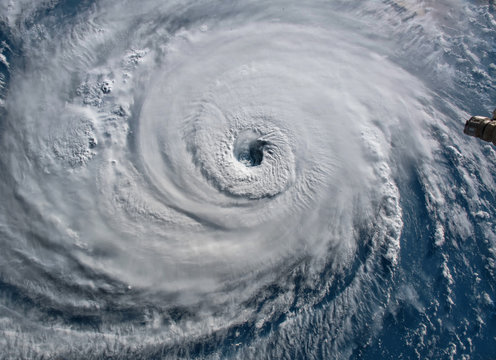
Satellite view of a hurricane over the ocean.

Research

Public hurricane models and cat bonds

Dr. Dan Li is a member of the multi-university Florida Public Hurricane Loss Model (FPHLM) team, which develops and maintains the FIU-led public hurricane catastrophe model. Her lab uses FPHLM-generated loss distributions to investigate how catastrophe bonds can be structured and priced so that pre-arranged capital can be released following hurricanes that produce severe insured losses.

Read more
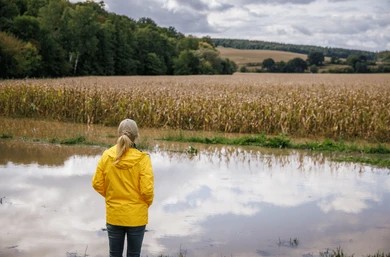
A person looking across a flooded cornfield.

Research

Hurricane risk and agriculture

Hurricanes damage crops, farm structures, and the routes that move food to market. This work follows wind and flood hazard into agricultural loss, and asks where financial tools can share a risk that hits many operations at once.

Read more
Abstract reservoir and intake.

Research

Water systems and climate finance

Earlier work follows flood, drought, and sustainability signals into water-utility decisions, municipal and corporate bond markets, green bonds, and parametric insurance for irrigation districts.

Read more

How we work

Methods that translate hazard uncertainty into actionable risk management and financial strategies.

01

Public catastrophe modeling

The Florida Public Hurricane Loss Model gives a public account of hurricane wind loss, open to scientific scrutiny where commercial catastrophe models stay proprietary. We treat that loss field as the starting point for financial design.

02

Physics-informed machine learning

Environmental risk data are often limited for the extreme events that matter most. Physics-informed machine learning combines observations with physical models and system constraints to produce more reliable and interpretable estimates. The lab couples these methods with stochastic ensembles to propagate uncertainty from hazards through exposure and vulnerability to infrastructure disruption and economic loss, supporting decisions based on the likelihood and range of possible outcomes rather than a single estimate.

03

Financial risk-transfer design

A hazard estimate is useful when it becomes a contract. The lab connects loss and revenue shortfalls to catastrophe bonds, parametric insurance, and water futures for utilities, irrigation districts, insurers, and public agencies.
Latest news

  • Aug 13, 2026Dan Li joined FIU as an assistant professor.
  • July 24, 2026Dan Li was a panelist at the IRMII wildfire and severe convective storms workshop.
  • Jan 15, 2026Dan Li gave a talk at the AMS Annual Meeting on wildfire prediction.
All news

Recent papers

All publications